What is the Aeration Process in Wastewater Treatment?
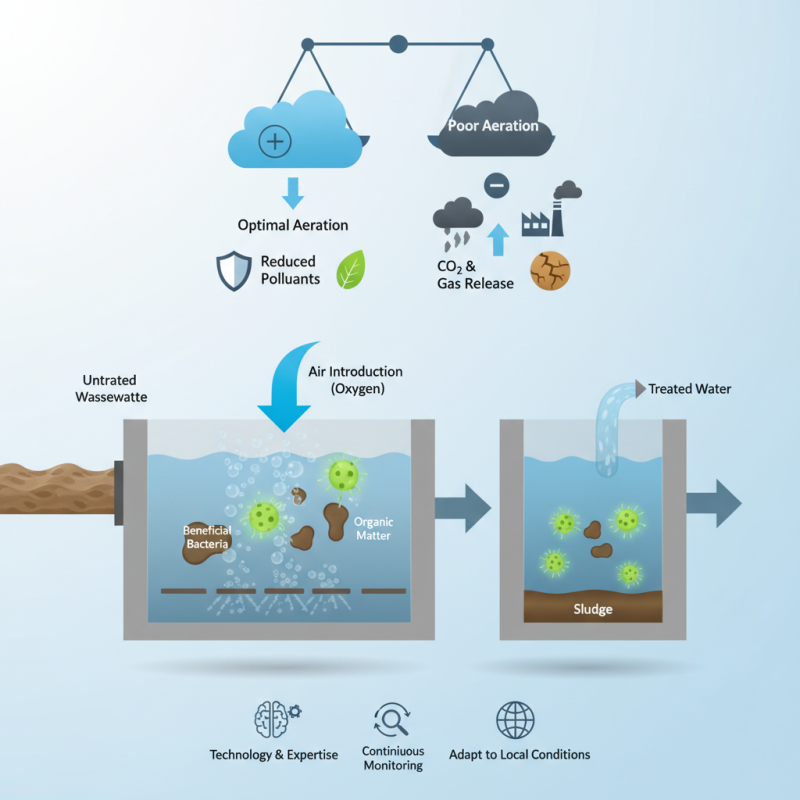
The Aeration Process In Wastewater Treatment is a vital technique. It plays a crucial role in enhancing water quality. During this process, air is introduced to wastewater. This infusion of oxygen supports the growth of beneficial bacteria. These microorganisms break down organic matter, making the water cleaner.
Effective aeration can significantly reduce pollutants. However, poorly managed aeration may lead to inefficiencies. Carbon dioxide and other gases can escape, leading to environmental issues. It is essential to balance aeration levels for optimal results. Too much air can cause excess foaming, while too little can slow down treatment.
Understanding the Aeration Process in Wastewater Treatment can prevent potential problems. It requires a mix of technology and expertise. Continuous monitoring is key. Experts must adapt techniques to local conditions. Improvement is always possible, making ongoing evaluation vital.
What is Aeration in Wastewater Treatment?
Aeration in wastewater treatment plays a vital role in promoting the breakdown of organic matter. This process involves introducing air into the wastewater, encouraging the growth of bacteria. These bacteria feed on pollutants, converting them into less harmful substances.
Aeration can be achieved through various methods, such as surface aeration or diffused aeration. Each method has its advantages and challenges. For example, surface aeration is simple but may not be as efficient in larger systems. On the other hand, diffused aeration can deliver air more effectively, but it requires a more complex setup. Finding the right balance can be tricky.
Additionally, the aeration process can cause unwanted odors and noise if not managed properly. Some facilities struggle with these issues, impacting their operations. Regular maintenance and monitoring are necessary to prevent these problems.
Understanding the specific needs of a wastewater treatment facility is crucial for optimizing the aeration process. Each system is unique, and tailored solutions can lead to better efficiency.
Overview of the Aeration Process and Its Importance
The aeration process in wastewater treatment plays a crucial role in maintaining water quality. It involves introducing air into the wastewater, which encourages the growth of aerobic microorganisms. These microorganisms are essential for breaking down organic matter. Their activity significantly reduces pollutants in the water, making it cleaner and safer for the environment.
Aeration systems can vary. Some use diffusers to release air, while others may employ mechanical mixers. Each method has pros and cons. For instance, diffused aeration is energy-efficient but may require more maintenance. Mechanical systems are easier to monitor, yet they often consume more energy. It is vital to select the right aeration method based on specific treatment needs.
Despite its importance, the aeration process can have drawbacks. Over-aeration may lead to excessive energy consumption. This can increase operational costs over time. Additionally, inadequate aeration can result in poor treatment outcomes. Thus, continuous monitoring and adjustments are necessary for optimal performance. Understanding these dynamics can enhance the effectiveness of wastewater treatment processes, ensuring cleaner water for future generations.
Overview of the Aeration Process in Wastewater Treatment
| Parameter | Description | Importance |
| Aeration Type | Process of introducing air into wastewater | Essential for biological treatment of wastewater |
| Primary Goal | Increase oxygen levels for microorganisms | Supports aerobic digestion of pollutants |
| Common Methods | Diffused aeration, surface aerators | Efficient mixing and oxygen transfer |
| Benefits | Reduces organic matter, enhances treatment efficiency | Improves overall water quality |
| Challenges | Energy consumption, operational complexity | Need for monitoring and maintenance |
Types of Aeration Methods Used in Wastewater Treatment
Aeration is crucial in wastewater treatment. It involves adding air to water. This process supports the growth of aerobic bacteria, which decompose organic waste. Various methods for aeration exist, each with unique benefits and drawbacks.
One common method is the diffused aeration system. It uses air diffusers submerged in treatment tanks. According to industry studies, this method can achieve oxygen transfer efficiencies between 20% to 30%. While effective, it requires regular maintenance. Clogged diffusers can reduce efficiency. Another prevalent technique is mechanical aeration. It uses paddles or impellers to mix air and wastewater. This system offers flexibility in operational settings. However, energy costs can be high.
Another noteworthy approach is the surface aerator. It exposes wastewater to air by creating a turbulent surface. This method is less expensive and simpler to maintain. However, surface aerators can produce noise, leading to community concerns. The choice of aeration method depends on site-specific conditions. Factors such as wastewater composition and local regulations significantly impact decisions. Understanding these elements leads to more effective treatment systems.
Key Parameters Influencing Aeration Efficiency
Aeration is a critical step in wastewater treatment. It enhances the degradation of organic matter by microorganisms. The efficiency of aeration can be influenced by several key parameters. One of these is the oxygen transfer rate. It determines how much oxygen is available for microbial activity. A higher transfer rate often leads to better treatment performance.
Another important factor is the mixer design. Different designs affect how well air is mixed with the wastewater. Some designs promote better mixing, which can lead to higher efficiency. The size and shape of the aeration tank also play a role. Tanks that allow for more surface area can facilitate oxygen diffusion, improving the overall process.
Temperature is often overlooked but is crucial. Warmer temperatures can increase microbial activity, resulting in more efficient treatment. Conversely, very high or low temperatures can inhibit the process. To achieve optimal aeration, these factors must be balanced. Understanding these parameters allows for adjustments to create more effective wastewater treatment systems. However, it is an area that requires continuous assessment and improvement to meet changing demands.
Impact of Aeration on Biological Oxygen Demand (BOD) Reduction
Aeration plays a crucial role in wastewater treatment. It enhances the biological processes that break down organic matter. This process facilitates the transfer of oxygen into the water, creating an environment for aerobic bacteria to thrive. These bacteria consume the organic pollutants present in the wastewater. As they feed, they multiply and ultimately reduce the Biological Oxygen Demand (BOD).
Reducing BOD levels is vital for maintaining water quality. High BOD indicates more organic pollution, which can harm aquatic life. Effective aeration lowers these levels significantly. However, not all aeration systems achieve the same results. Some may require fine-tuning or adjustments to maximize oxygen transfer rates. This inefficiency can lead to longer treatment times, and higher operational costs.
Moreover, excessive aeration can disturb the delicate balance of the treatment process. It might inadvertently harm beneficial microorganisms. Therefore, monitoring is essential. Operators must strike a balance between sufficient oxygen supply and potential over-aeration. This balance is critical for effective wastewater treatment and requires ongoing reflection and adaptation.
Aeration Process Impact on Biological Oxygen Demand (BOD) Reduction
This chart illustrates the impact of aeration time on the reduction of Biological Oxygen Demand (BOD) in wastewater treatment. As aeration time increases, the BOD levels decrease significantly, indicating enhanced treatment efficiency.
Conclusion
The aeration process in wastewater treatment plays a crucial role in improving water quality by facilitating the breakdown of organic matter. This process introduces air into the wastewater, promoting the growth of microorganisms that are essential for the biodegradation of pollutants. Understanding the aeration process is vital, as it significantly influences the efficiency of wastewater treatment systems.
Various aeration methods, including diffused aeration and mechanical aerators, are employed to enhance oxygen transfer. Key parameters, such as oxygen levels and mixing rates, affect aeration efficiency and, consequently, the reduction of Biological Oxygen Demand (BOD). Despite its importance, the aeration process faces challenges like energy consumption and equipment maintenance, prompting ongoing innovations in aeration technology to improve sustainability and effectiveness in wastewater treatment.