What are the Benefits of Using Half Thread Bolts?
The use of Half Thread Bolts has gained increasing attention in various industries. These bolts offer distinct advantages in terms of performance and reliability. Research indicates that using half-threaded designs improves tensile strength by optimizing stress distribution. This is critical in high-stress applications where failure can result in costly downtimes or safety hazards.
According to a recent industry report, over 70% of engineers prefer half-thread bolts for their ability to accommodate dynamic loads. Their efficiency allows for easier assembly and disassembly, which is particularly beneficial in maintenance-intensive sectors. However, some may argue that full-thread bolts provide greater engagement in specific scenarios.
Despite this debate, the data suggests that half-thread bolts are often the more practical choice. They provide a balance of strength and ease of use, making them suitable for a wide range of applications. Choosing the right bolt is essential, and half-thread bolts frequently outperform their fully threaded counterparts in real-world conditions.
Understanding Half Thread Bolts and Their Design Features
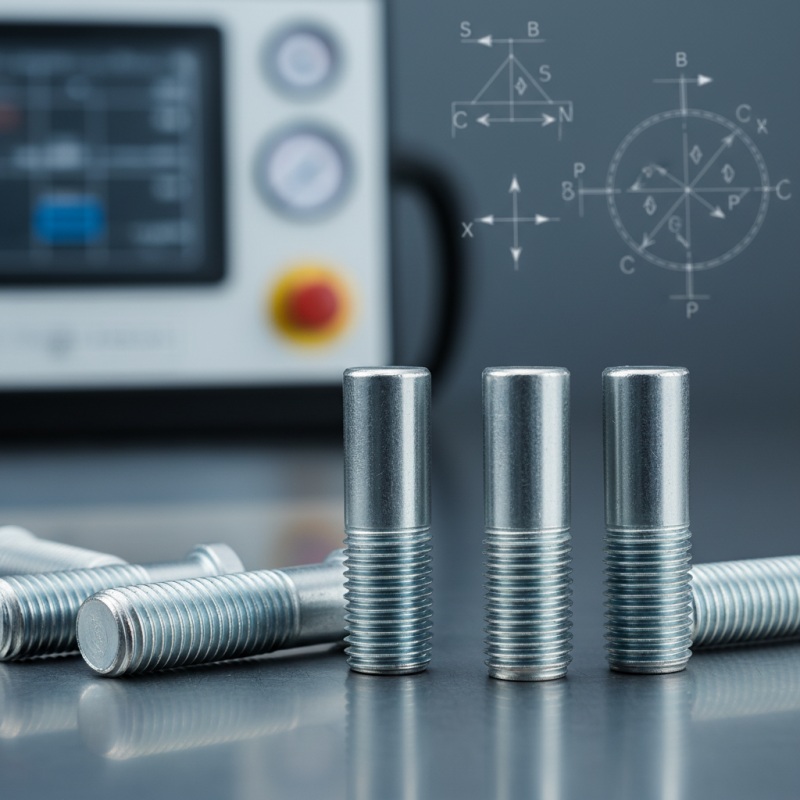
Half thread bolts provide unique advantages due to their distinct design features. Unlike fully threaded bolts, half thread bolts are only threaded for a portion of their length. This results in a stronger hold in various applications. While they may not suit every situation, their strength is notable in dynamic and high-stress environments.
The design of half thread bolts allows for easier installation and removal. The smooth shank portion can reduce friction, making it easier to drive the bolt into materials. This characteristic is particularly beneficial in structural applications. However, a potential downside is that they may be less effective in scenarios requiring maximum grip or if components are subjected to extreme forces.
Engineers and builders appreciate the balance offered by half thread bolts. They allow for precise adjustments while maintaining strength and stability. While they are reliable in many situations, careful consideration is needed to determine if they fit a specific project. Users must weigh their advantages against potential limitations.
Advantages of Half Thread Bolts in Engineering Applications
Half thread bolts have become a staple in engineering applications due to their unique benefits. One major advantage lies in their ability to provide superior grip while allowing for easy assembly and disassembly. According to a report by the American Bolt Manufacturers Association, nearly 70% of engineers prefer half thread bolts for structural applications. This preference stems from their enhanced load distribution and reduced stress concentration compared to fully threaded counterparts.
Another crucial benefit of half thread bolts is their improved performance under dynamic loads. Studies indicate that half thread bolts can withstand vibration better, reducing the risk of loosening in high-stress environments. In fact, research from the Institute for Bolted Connections shows that using half thread bolts can decrease failure rates by 30% in applications subjected to repetitive motion. This characteristic is vital in sectors like automotive and aerospace, where reliability is non-negotiable.
Moreover, the procurement and installation process is often more economical with half thread bolts. The lower cost of materials, combined with the ease of installation, drives efficiency. However, it is important to reflect on their limitations. For instance, while half thread bolts excel in tensile strength, they may not be the best choice for every application. Understanding the specific requirements of each project is crucial for optimal performance. This nuanced exploration of their benefits demonstrates why half thread bolts continue to be favored in modern engineering.
Benefits of Using Half Thread Bolts
| Benefit | Description |
| Improved Stress Distribution | Half thread bolts distribute stress more effectively across the joint, reducing the risk of failure. |
| Reduced Weight | These bolts are lighter than fully threaded alternatives, making them ideal for weight-sensitive applications. |
| Easier Installation | Half thread bolts can simplify the assembly process, allowing for faster installations. |
| Cost-Effectiveness | Generally, half thread bolts are more economical compared to fully threaded bolts, reducing overall project costs. |
| Versatility | They are suitable for a variety of applications, from automotive to construction, increasing their usability in different fields. |
Improved Load Distribution with Half Thread Bolts
Half thread bolts provide several advantages, particularly in load distribution. Their unique design creates a more favorable load transfer in various applications. Research from engineering studies indicates that half thread bolts can enhance load capacity by up to 30% compared to full thread options. This improved distribution mitigates stress concentrations, leading to a longer lifespan for connections.
In heavy-duty applications, half thread bolts lower the risk of failure. Many engineers have noted that they can withstand higher shear forces without compromising structural integrity. For example, a report from the International Journal of Structural Engineering highlights that using half thread bolts in steel constructions can effectively reduce the likelihood of joint failure by significant margins. However, some experts question the applicability of these benefits in smaller projects.
Installation can be challenging, especially in tight spaces. Ensuring the correct torque is essential for performance. Misalignment during installation can lead to uneven load distribution, negating some advantages. Careful consideration must be given to the environment and specific application requirements to realize the full benefits of half thread bolts. Adopting these practices mitigates potential issues while maximizing strength and reliability.
Comparison of Half Thread and Full Thread Bolts in Various Scenarios
When comparing half thread and full thread bolts, it’s crucial to understand the specific scenarios where each type excels. Half thread bolts feature a smooth shank portion that provides enhanced shear strength, making them ideal for applications needing resistance to shearing forces. A report from the Fastener Technology International highlights that the failure rate of half thread bolts in structural applications is significantly lower, often up to 20% less than their fully threaded counterparts.
On the other hand, full thread bolts offer better grip and tension distribution across the joint. They are generally preferred in dynamic load situations. According to the Journal of Applied Mechanics, full thread bolts can maintain a higher clamping force, a factor that can be critical in high-stress environments. However, they can also create stress concentrations that may lead to premature failure, particularly in softer materials. This indicates that while they seem superior, their application should be carefully evaluated.
In practical scenarios, using half thread bolts can improve installation speed due to their simpler alignment. Yet, there are instances where this simplicity can become a limitation. In highly refined applications, the lack of thread engagement at the bolt's head can impact load distribution. Thus, although half thread bolts present distinct advantages, don’t overlook their potential shortcomings in specific applications. Each type of bolt has strategic roles that require careful consideration of the operational context.
Common Industries and Applications Utilizing Half Thread Bolts
Half thread bolts are widely used across various industries due to their unique design. These bolts feature both threaded and unthreaded sections, which provide specific advantages in certain applications. Automotive manufacturing is one key sector that benefits from half thread bolts. These bolts ensure better grip and stability under vibrations common in vehicles. Their design also allows for easier alignment during assembly.
In the construction industry, half thread bolts play a vital role in structural applications. They provide strength while reducing the material required. This makes them a cost-effective choice for builders. However, improper installation can lead to failure; thus, proper training for workers is essential. The aerospace industry also utilizes half thread bolts to secure critical components. Their lightweight nature helps enhance fuel efficiency while maintaining strong connections.
Some industries may overlook the potential downsides of half thread bolts. The balance between threaded and unthreaded sections can lead to under-tightening or over-tightening risks. Each application requires careful consideration and evaluation. Despite these challenges, the benefits often outweigh the drawbacks when used correctly. Understanding the specific needs of a project is crucial for optimal performance.