Why Fingerprint Time Attendance is Essential for Modern Workforce Management
In today's fast-paced business environment, effective workforce management is more critical than ever. One essential tool that has emerged to address the complexities of time tracking is Fingerprint Time Attendance. This technology not only enhances accuracy in recording employee hours but also significantly reduces instances of time theft and buddy punching, ensuring that employers pay for the actual work performed. As industry expert Dr. Alex Grant, a leading authority in workforce optimization, states, "Fingerprint Time Attendance is not just a trend; it is a foundational technology that strengthens accountability and efficiency in the workplace."
The integration of Fingerprint Time Attendance systems aligns closely with the growing need for organizations to adopt innovative solutions that streamline operations and promote a culture of transparency. By accurately capturing employee attendance data, businesses can make informed decisions, enhance payroll accuracy, and improve overall productivity. Furthermore, this technology fosters a sense of ownership among employees, as they are aware that their time is being accurately tracked and recorded.
As we delve deeper into the importance of Fingerprint Time Attendance for modern workforce management, we will explore how its implementation can transform organizational practices and lead to a more engaged, accountable, and efficient workforce. The advantages go beyond mere compliance; they contribute to a strategic approach in managing human resources effectively.
The Importance of Accurate Attendance Tracking in the Workplace
Accurate attendance tracking is a cornerstone of effective workplace management, significantly impacting productivity and operational efficiency. In today's fast-paced work environment, businesses need reliable methods to monitor employee attendance and performance. Fingerprint time attendance systems stand out as an essential tool in achieving this goal, providing a precise and tamper-proof method of tracking when employees clock in and out. This technology minimizes errors associated with manual entry and the potential for buddy punching, where one employee marks the attendance of another, ensuring that the data collected is both accurate and trustworthy.
Furthermore, precise attendance tracking aids in compliance with labor laws and company policies. Organizations can easily generate reports that reflect attendance patterns, helping to identify trends, manage overtime, and make informed decisions regarding staffing and resource allocation. By maintaining an accurate record of employee attendance, businesses can foster a fair workplace environment, where accountability is prioritized, and performance is rewarded based on concrete data. The transition towards fingerprint time attendance not only streamlines processes but also enhances overall workforce management, driving sustained growth and efficiency in modern organizations.
Attendance Tracking for Modern Workforce Management
This chart displays the attendance rate over five weeks, highlighting the importance of accurate tracking in modern workforce management. An efficient attendance system helps maintain productivity and accountability among employees.
Advantages of Fingerprint Technology Over Traditional Time-Tracking Methods
Fingerprint time attendance systems have become a significant advancement in workforce management, offering numerous advantages over traditional time-tracking methods. According to a report by Allied Market Research, the global biometric system market is expected to reach $57.4 billion by 2025, driven largely by the increasing demand for accurate and secure time-tracking solutions. Traditional methods, such as manual timesheets or punch cards, are notoriously prone to errors and time theft. A study conducted by the American Payroll Association indicated that businesses lose up to 7% of their payroll to time-related fraud each year, highlighting the urgent need for more reliable systems.
Fingerprint technology enhances accuracy and reduces the risk of buddy punching, where one employee clocks in for another. This technology ensures that attendance records are connected directly to each worker's unique biometric data, significantly minimizing the scope for fraudulent activities. Furthermore, a survey by the Aberdeen Group revealed that organizations using biometric time attendance systems experienced a 27% reduction in administrative costs associated with time tracking. Such efficiencies not only streamline payroll processes but also improve overall productivity by allowing HR personnel to focus on more strategic tasks rather than maintaining manual records. This combination of accuracy, security, and cost-effectiveness makes fingerprint time attendance an essential tool for modern workforce management.
How Fingerprint Time Attendance Improves Employee Accountability
Fingerprint time attendance systems have emerged as a vital tool in modern workforce management, primarily due to their impact on employee accountability. By utilizing biometric identification, these systems ensure that employees clock in and out accurately, reducing time theft and buddy punching. This precision fosters a culture of responsibility, as employees are aware that their attendance and working hours are being monitored closely. The transparency offered by fingerprint attendance not only enhances trust between employers and employees but also significantly streamlines payroll processes by eliminating discrepancies.
Tips for effective implementation of fingerprint attendance systems include:
- Training employees thoroughly on how to use the technology
- Emphasizing its benefits in promoting fairness and accountability
- Regular audits of attendance data to identify patterns or issues early on
- Ensuring that the technology is regularly maintained and updated
Ultimately, these practices will improve efficiency and reliability, yielding greater benefits for the organization.
Another valuable aspect is integrating the fingerprint system with other workforce management tools. This integration can provide comprehensive insights into employee performance, attendance trends, and productivity levels. By harnessing this data, organizations can make informed decisions regarding staffing and resource allocation, thereby enhancing overall efficiency and workplace morale.
Implementation Challenges and Solutions for Fingerprint Attendance Systems
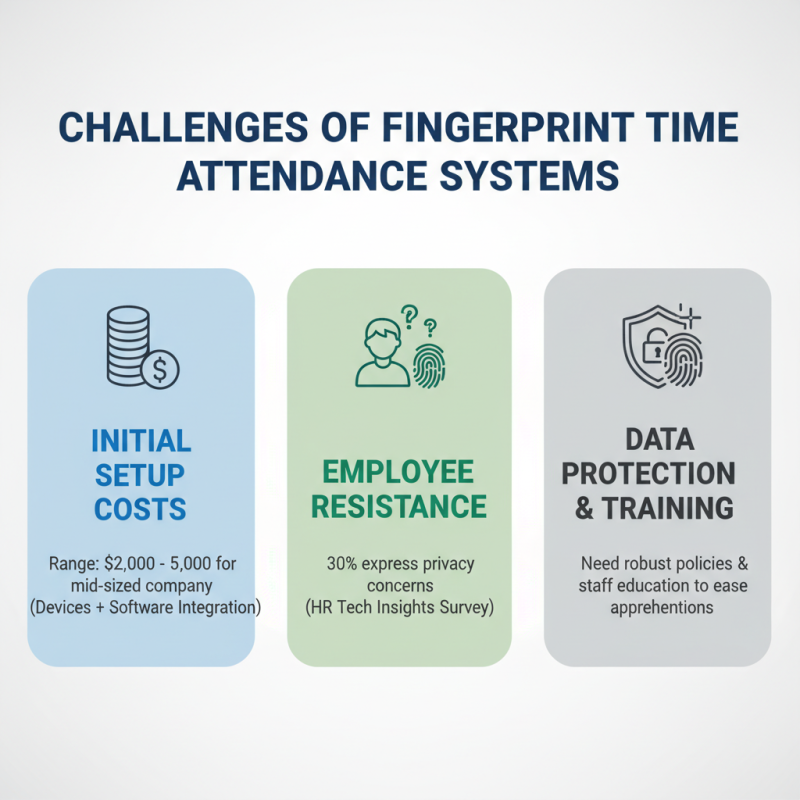
The implementation of fingerprint time attendance systems presents several challenges that organizations must address to maximize their effectiveness. One major hurdle is the initial setup costs, which according to a recent industry report, can range from $2,000 to $5,000 for a mid-sized company, depending on the number of devices and software integration requirements. Additionally, organizations may face resistance from employees who are unfamiliar with biometric technology. A survey by HR Tech Insights indicated that nearly 30% of employees express privacy concerns regarding biometric data collection, which necessitates robust data protection policies and staff training to ease apprehensions.
Another significant implementation challenge is ensuring the accuracy and reliability of fingerprint systems. Environmental factors such as dirty or wet fingers can affect recognition rates, leading to frustration and potential time theft. According to research from TechPulse Analytics, systems that incorporate advanced algorithms can enhance accuracy by up to 20% compared to traditional models, making it imperative for companies to invest in high-quality technology. Furthermore, regular maintenance and updates are crucial to adapting to changing workforce demographics and ensuring that the system remains both efficient and secure. By acknowledging and tackling these challenges head-on, organizations can leverage fingerprint attendance systems effectively, fostering improved workforce management in the modern age.
The Future of Workforce Management: Trends in Biometric Technologies
The rapid advancement of biometric technologies is reshaping the landscape of workforce management. As organizations seek more efficient and secure ways to manage employee attendance, fingerprint time attendance systems are leading the charge. These systems not only streamline the process of tracking working hours but also mitigate issues such as buddy punching and time theft, ultimately improving overall productivity. The convenience and accuracy offered by fingerprint recognition make it an attractive option for modern employers.
Looking towards the future, the integration of biometric technologies into workforce management is likely to expand beyond just fingerprint scanning. Innovations such as facial recognition, iris scanning, and even voice recognition are emerging as viable alternatives, each bringing unique benefits to the table. These trends indicate a shift towards a more automated and data-driven approach to employee management, where real-time analytics can inform staffing decisions and optimize workforce allocation. As biometric technology becomes more sophisticated and widespread, companies that embrace these advancements will not only enhance operational efficiency but also create a more secure and accountable work environment.